

Ukraine’s Long War, Corruption Reform, and Economic Freedom
How does Ukraine’s long war compare historically with earlier conflicts, and what do corruption, reform, and economic freedom indexes reveal about Ukraine and the United States?

“The future of Ukrainian society should be decided by Ukrainians themselves.”
Rick Rosner is an accomplished television writer with credits on shows like Jimmy Kimmel Live!, Crank Yankers, and The Man Show. Over his career, he has earned multiple Writers Guild Award nominations—winning one—and an Emmy nomination. Rosner holds a broad academic background, graduating with the equivalent of eight majors. Based in Los Angeles, he continues to write and develop ideas while spending time with his wife, daughter, and two dogs.
In this interview, Scott Douglas Jacobsen and Rick Rosner discuss Ukraine’s long war, historical comparisons with the Soviet-Nazi conflict and the American Civil War, corruption, Ukrainian social resilience, Western realism, and economic freedom indexes. Rosner critiques the Heritage Foundation’s political biases while examining Ukraine’s and America’s institutional scores. Jacobsen emphasizes universal human rights, evidence-based reporting, Ukrainian self-determination, and the distinction between documented reform and unresolved wartime corruption across contemporary Ukraine and United States politics today.
Historical Comparisons and Ukraine’s Long War
Scott Douglas Jacobsen: Two points of contact for discussion today. As a chronological only comparison, first, from the Eastern European perspective of history: the war from the 2014 annexation of Crimea and the Donbas, through the full-scale invasion, the purported “special military operation” of the Russian Federation, the Kremlin, and Putin. The war is a long war. Within this historical context, it invites comparison with the Soviets and the Nazis. This war has now lasted longer than the Soviet Union fought Nazi Germany, from June 22, 1941, to May 9, 1945. Second, from the American perspective of history, this war has lasted longer than the American Civil War, in the same style of analysis.
Rick Rosner: Right, and also longer than U.S. involvement in World War II, and longer than the American Civil War by common dating, though not longer than Vietnam, Afghanistan, the American Revolution, or some broader U.S. conflict timelines. What are Ukrainians thinking about the U.S. versus Iran? Does it feel parallel, a world superpower taking on a non-superpower and ending in a stalemate? What do they think over there about what is happening?
Ukrainian Perspectives and Social Change
Jacobsen: It is likely as in any country: very mixed. There is generally a sentiment of wanting to speak Ukrainian and follow national laws. People do not like the corruption in the country, but they acknowledge it.
Rosner: So this is the Ukrainian perspective on Ukraine and the war.
Jacobsen: Yes, but Ukrainians are generally empathetic and sympathetic toward one another. There are scandals, and there are problems carried forward from the Soviet period that remained after the collapse of the Soviet Union. In that sense, the war did not fundamentally change society.
However, the changes in society during the war can move in two directions along a spectrum across issues such as corruption, media freedom, women’s rights, and related themes. On numerous measures, there is now a divergence between the Russian Federation and Ukraine. Before the war, they were broadly comparable or at least within the same range. Now they are distinctly different in terms of rankings on third-party international indexes and assessments.
That is the major development. As for perspectives, those differ from one Ukrainian to another. Very few hold anti-Western sentiments. They are realistic about the West. My view: All cultural orientation and systems enacted amount to tradeoffs depending on individual sentiments and sensibilities inclusive of a wide diversity of human preferences in experiences and societal organization while no society holds a monopoly of wisdom, so all societies and individuals should be open to hearing from one another in open exchange. Some see the West realistically in its strengths and weaknesses, which goes to the broader point about trade-offs, which is entirely fair. They make some valid points.
My general perspective while here is that the future of Ukrainian society should be decided by Ukrainians themselves. I am here to do a job. I believe the human rights record favors the Ukrainians so far, and strongly in multiple domains. As a result, the reporting can appear pro-Ukrainian, but only because the underlying ethic is universalism applied through the best available evidence.
The Russian Federation has had opportunities, for example through the UN Commission of Inquiry on Ukraine, to submit its side of the argument. The Commission has stated that the Russian Federation has not responded to any of its written requests. If you are working from the best available evidence, and one side excludes itself from the process, then its claims will not appear or appear less in those reports, or would remain as allegations, as such.
Part of this also stems from the fact that, according to UN General Assembly resolutions, Russia’s invasion is an act of aggression against Ukraine. Russia is broadly regarded as the aggressor state, while Ukraine is widely regarded as the defending state.
The Heritage Foundation and Economic Freedom
Rosner: All right. So the Heritage Foundation is, in my mind, a very obnoxious and insidious organization. They are the ones behind Project 2025, which critics argue helped shape, and in any case substantially anticipated, parts of Trump’s agenda, as well as the agenda of many people around him.
However, they do a couple of things that I like. Heritage has something called the Index of Economic Freedom, where it ranks most of the world’s countries according to what it calls 12 economic freedoms. They also have something called the Election Fraud Database, where they keep track of a sampling of proven instances of election fraud in the United States over the past several decades. There have not been many, at least within Heritage’s own public database, relative to billions of votes cast. Right-wingers like to claim there is endless fraud, but you can go to this very conservative organization and show that the documented numbers are actually very small, including only a limited number of non-citizens caught attempting to vote, whether intentionally or because they misunderstood the rules. Anyway, not much.
You can also look at Ukraine’s progress on the Index of Economic Freedom, or at least you could before the full-scale invasion disrupted the rankings and comparisons. Ukraine started off with a relatively low score after the fall of the Soviet Union. Scores in the 80s or 90s are considered strong. Ukraine began much lower because corruption under the Soviet Union was endemic throughout much of the Soviet system. Since the collapse of the Soviet Union, there has been a push over roughly 30 years to clean up Ukraine’s institutions, and Ukraine had been making fairly steady progress.
But let us look at this year’s numbers for Ukraine. Tax burden, again, according to the Heritage Foundation, which is inherently anti-tax, they give Ukraine one of its highest scores, almost 84, on taxes. So I do not know what is happening over there. You guys are not paying much in taxes?
Inflation, Taxation, and Trade
Jacobsen: I do not know.
Rosner: How is the inflation there? Let us see. Because if you are not paying taxes and you are spending all this money building, what, drones at an annualized scale that can reach roughly five figures per day in some production-capacity estimates, rather than a verified daily production count of 10,000.
Jacobsen: Fact checking myself here, so Ukraine recorded inflation of 7.4% in January 2026, which was the lowest level in roughly 18 months.
Rosner: Okay, so if you are at war, you are spending a huge amount of money you do not have, which means you are printing money, and you are saying they just had a month with the lowest inflation in the past 18 months?
Jacobsen: I do not know if it was the absolute lowest, but it was down from December 2025. December was 8%. I do not know if that is what would be considered the 18-month low, but it had declined.
Rosner: So it is pretty, I mean, for a country not at war, that level of inflation would upset a lot of people. For a country at war, I do not know; it does not seem unreasonable.
Trade freedom gets a 73. That is their second-highest score. So I guess people are generally free to trade; they do not have extensive restrictions on who they can trade with.
They have low scores for property rights. Government integrity only gets a 35 out of 100. Judicial effectiveness gets a 28. Fiscal health gets a 4 out of 100. So, all right, they are at war, so yes, their finances are a disaster.
I do not know. Without looking at the overall context, it is hard to say. But trade freedom gets a high score. Here is what they say about Ukraine: before Russia’s invasion, Ukraine’s tariff rate was approximately 3.5%, and non-tariff barriers severely limited trade freedom. The investment framework was underdeveloped, and bureaucratic requirements deterred much-needed private investment growth. The banking system was burdened by a large number of non-performing loans.
So, I do not know, but this is still a pretty good score. I assume the imperatives of war have knocked down some of the barriers to trade.
And here is Ukraine’s score in terms of how it functions as a country according to the Heritage Foundation, which favors largely unfettered capitalism. They start scoring Ukraine in 1995 and give it a 40. Then the country gradually bounces around, climbs up to 56 in 2005, falls back down into the 40s, and climbs back up to 56 again in 2021. Then, in 2022, the full-scale war starts.
So, according to these indices, not great in terms of functioning as a country and government, but still making upward progress until the war hit.
The United States, for comparison, which has one of the highest scores among countries with populations over 80 million, still only scores around a 70. It takes a small, very wealthy country like Singapore to score much higher. Singapore is number one, scoring 84.4. Switzerland, known for banking, business, and investment friendliness, is in second place; Ireland is third; Australia is fourth.
So anyway, Ukraine started off in rough shape and improved over the past 30 years until the full-scale war began. I assume the war has made people more public-spirited and perhaps reduced some corruption, though obviously not all of it. Right? You said there have been scandals. Were they related to people supplying materials for the war effort?
Corruption, Enforcement, and Wartime Institutions
Jacobsen: At several levels and sectors of the country. It is nowhere near the scale seen in Russia, but some major scandals have been publicly reported.
Probably the correct framing is that these are scandals as scandals, but also part of a broader trend of combating corruption, and therefore indicative of independent institutions tracking and tackling it. If there were no tracking or enforcement mechanisms, these would not even become news stories, because they would not be recognized as problems.
Rosner: So is this Zelensky doing this, going after corruption, or…?
Jacobsen: I think it is the whole country, to some degree or another. Others engage in it. For some people, it is a significant issue. For others, they focus more on their daily routine, so they do not care as much. It’s, probably, like a lot of other places. However, corruption is relatively high in Ukraine and very high in the Russian Federation, decreasing over time in Ukraine and increasing over time in the Russian Federation.
Again, if people are being bombed overnight or are dealing with grief, stress, or displacement, sometimes a day can become constrained to surviving that day rather than focusing on the longer-term horizons typically required for combating corruption, whether individual instances or broader patterns.
The United States and Index Bias
Rosner: By comparison, let us look at the United States, which is ranked the 22nd most economically free country in the world according to this index, scoring a 72.8. It has high scores for property rights, business freedom, monetary freedom, investment freedom, and financial freedom. Its lowest score is fiscal health because the United States is spending more than it brings in, and the second-lowest score is government spending. But again, this is the Heritage Foundation, so its priorities do not necessarily line up with my priorities, for instance.
But I wanted to look at the score over time because Trump is running what many critics describe as an extraordinarily corrupt White House. There are reported allegations and ethics concerns involving people allegedly seeking or offering money in connection with pardons, Trump and his family engaging in multiple cryptocurrency ventures, people allegedly seeking favorable treatment by donating directly to Trump, and Trump targeting perceived enemies. So is this index a legitimate measure of what is going on? I would say not exactly.
The Heritage Foundation started this index in 1995, and the United States comes in at 76.7, which is a very strong score. That score keeps climbing until it reaches the 80s around 2006, during the second Bush administration. Then, in 2007 and 2008, the financial crash and the Great Recession occur because too many people were given risky mortgages. People who could not realistically afford homes were approved for mortgages anyway so that those mortgages could be packaged into mortgage-backed securities and sold as investments.
Traditionally, mortgages had been considered relatively safe investments because most people did not default. But then lenders began issuing mortgages to people who did not really qualify and selling them as though they were the same safe investments as before. When large numbers of borrowers defaulted, those investments collapsed, contributing to a worldwide recession tied to failures in the U.S. financial and mortgage systems.
The Heritage Foundation did not significantly lower the United States’ score because of that crisis. What appears to happen instead is that the U.S. score declines somewhat during the Obama administration, rises slightly during Trump’s first administration, then drops again during Biden’s presidency. Of course, one could also argue that the COVID-19 pandemic coincided with Biden taking office, and that pandemic disrupted international business activity and contributed to inflation.
Under Biden, the score dropped into the low 70s, and under Trump it has risen again, from around 70 back to approximately 73. That suggests this index has a substantial political dimension to it. The Heritage Foundation can only be trusted so far in terms of these rankings.
Jacobsen: Thank you very much for the opportunity and your time, Rick.
Scott Douglas Jacobsen is the Lifestyle and Finance Writer and Editor for A Further Inquiry with more than 400 published articles in the outlet. He is the Founder and Publisher of In-Sight Publishing (ISBN: 978–1–0692343; 978–1–0673505) and Editor-in-Chief of In-Sight: Interviews (ISSN: 2369–6885). He writes for International Policy Digest (ISSN: 2332–9416), The Humanist (Print: ISSN, 0018–7399; Online: ISSN, 2163–3576), Basic Income Earth Network (UK Registered Charity 1177066), Humanist Perspectives (ISSN: 1719–6337), Vocal, Medium, The Good Men Project, The New Enlightenment Project, The Washington Outsider, rabble.ca, and other media. His bibliography index can be found via the Jacobsen Bankat In-Sight Publishing. He has served in national and international leadership roles within humanist and media organizations, held several academic fellowships, and currently serves on several boards. He is a member in good standing in numerous media organizations, including the Canadian Association of Journalists, PEN Canada (CRA: 88916 2541 RR0001), Reporters Without Borders (SIREN: 343 684 221/SIRET: 343 684 221 00041/EIN: 20–0708028), and others.
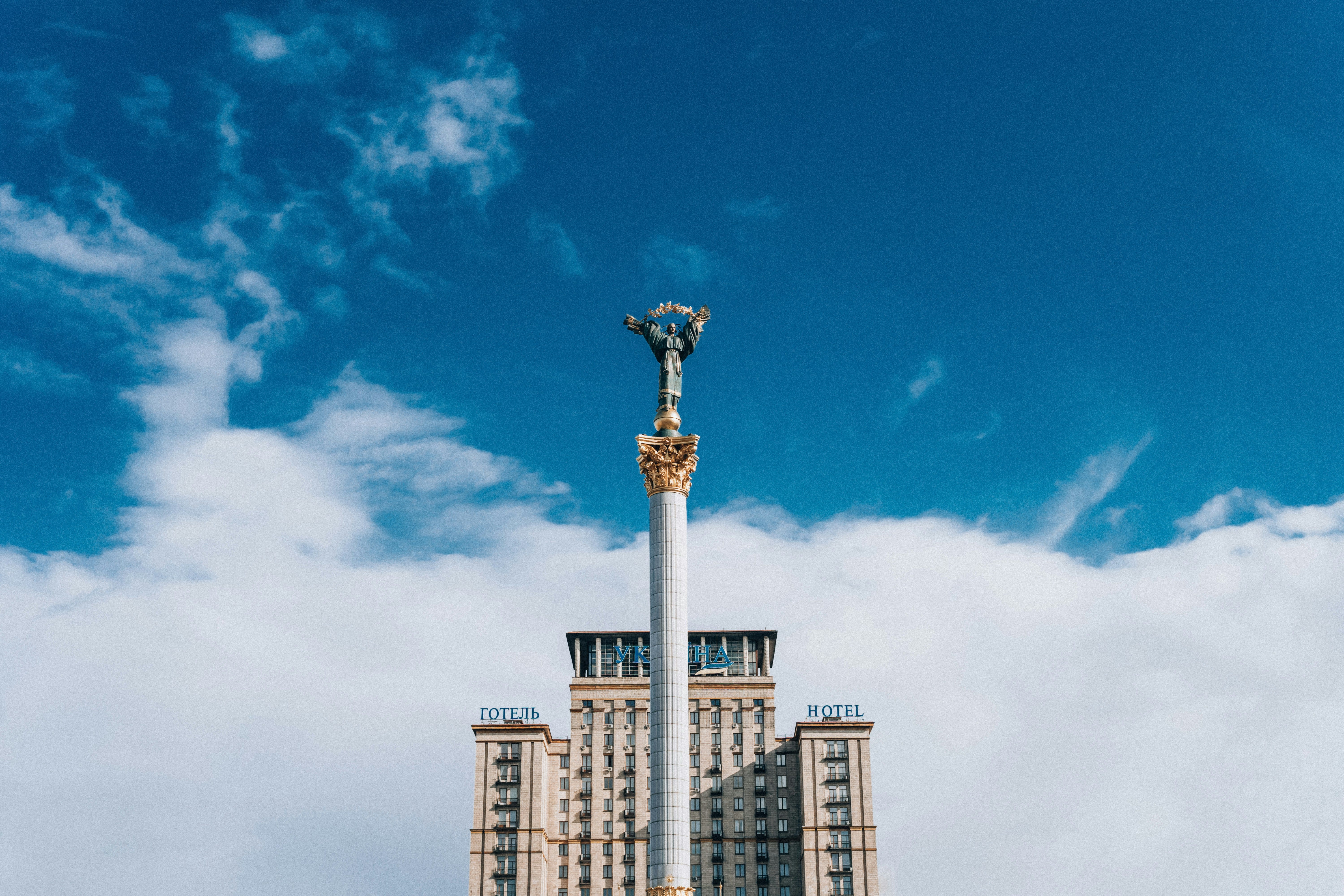
Photo by Victoria Prymak on Unsplash